You’re talking about justifying killing these animals to solve problems that are caused by farming the animals to begin with, which you even say yourself.
I can’t say anything about maintaining soil fertility because I know nothing about it, but what is about chickens that preserves the soil, and why can it only come from those chickens?
Something about nutrients in the soil I imagine, right?
Since we plant things that we eat and sell (or give away) we are removing nutrients from the soil. Someone has to put them back. We could do that with industrial NPK fertilizer, but that's not very ecological. Chicken manure is a more complete and natural fertilizer, and for the most part the chickens even spread it around for us. They also engage in some pest control (the ducks are especially good at that, without them we'd have a problem with some foreign snails that have invaded around here).
We're not really "farming" the animals. We're more co-habitating with them. The birds and humans here are part of a society, an ecosystem that needs both and in which humans play a role of both caretakers and occasionally predators. Predators are necessary in a natural system and what we're trying to do is to imitate nature as best we can. This all may sound a bit pretentious, but, like I said, the birds are actually free to leave, and generally they don't, so it would seem they agree. In fact, a couple of times wild ducks have even voluntarily joined our little society!
Also, I'm not trying to "justify" anything. What we're trying to do here is a live a bit closer to nature than people generally do, reduce our ecological footprint a bit, and treat nature and all life with a bit more respect. And what we've found is that you can't be close to nature without facing death in various forms every day.
So ultimately, I don't think that Pollan's conclusion is "weird" and I don't think that "killing an animal ... is always wrong". I think treating nature with respect and letting sentient beings live their life in a way that respects their nature is more important than simply "not killing".
There are alternative models, such as biocyclic veganic agriculture, or in the future, foods created through fermentation [1] (this almost require no arable land). I recommend checking them out if you are interested in cycles in nature. Using animal manure, opposed to "plant manure" from nitrogen fixing plants, it also has its downsides because of the high levels of ammonia it kills most of the soil creatures such as worms, and more tilling and maintenance is required (which releases more carbon).
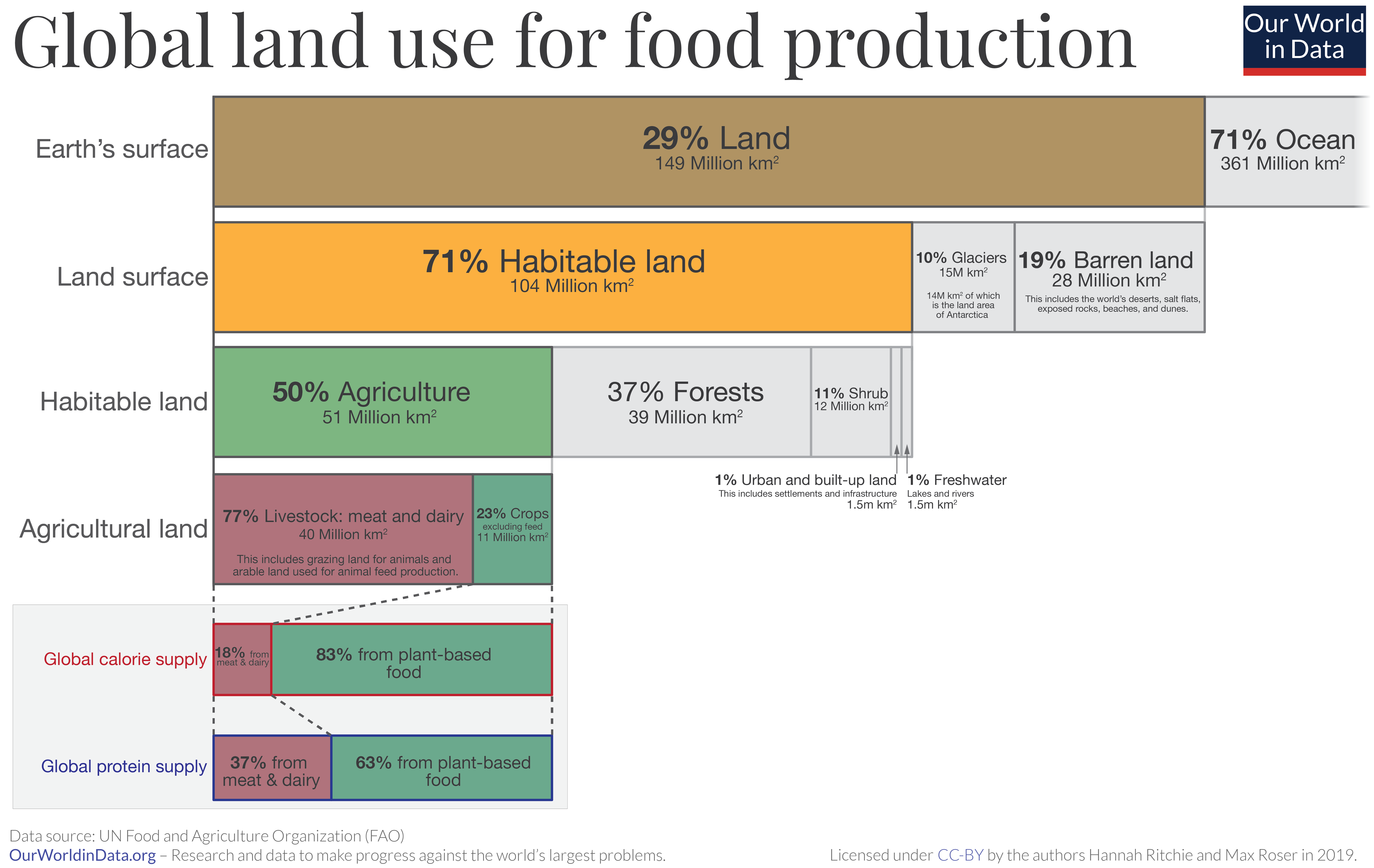
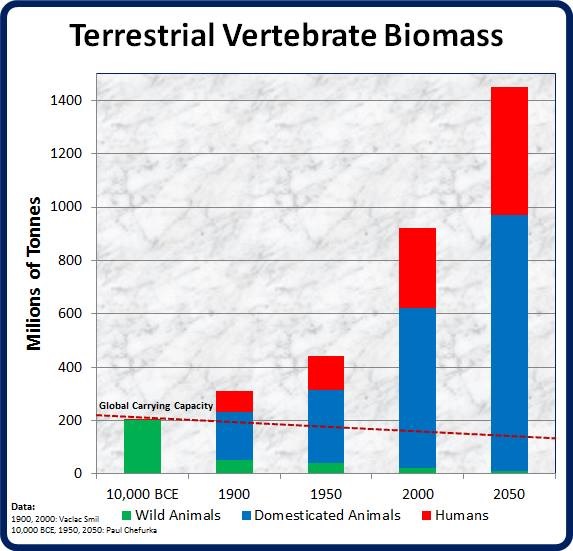
Personally I don't think that using livestock is living with nature, but is its antithesis. Since the earth is (at this moment) bound by the amount of biomass available through photosynthesis there is a limited carrying capacity for biomass. What we have done specifically is reduced the biodiversity by using more and more land mass for livestock and its feed. Of all habitable land, 50% is used for agriculture and 77% of that is used for livestock (while only providing us 18% of calories and 37% of protein) [2]. This has drastically reduced the number of wild animals and biodiversity, which I consider "nature" [3].
Ultimately, using livestock kills living beings (primarily in nature) somewhere else. If you're goals are living closer to nature, and reducing your ecological footprint, and your definition of nature is: "the phenomena of the physical world collectively, including plants, animals, the landscape, and other features and products of the earth, as opposed to humans or human creations.", then living closer to nature would mean rewilding your land and perhaps be a steward of that land. It would be a great means of treating nature and life with more respect :).
> I think treating nature with respect and letting sentient beings live their life in a way that respects their nature is more important than simply "not killing".
But isn't the best way to respect these animals is to avoid killing them when we don't need to in order to survive? I've talked to so, so many people who keep animals and ultimately kill them that talk about this reverence for the natural world, and they talk about how death is an intrinsic part of that natural world.
Sure, that's true, but that doesn't mean we need to contribute to that death (and suffering, naturally), when it doesn't need to take place. Will there always be gruesome, painful deaths? Of course. Will there always be animals that eat other animals? Definitely. But that doesn't mean it's totally fine for us to decide when animal lives or dies. An animal that has made no deals with you, has not agreed to any sort of symbiotic relationship which ends in it's death in order to feed you. Sure, the animals are treated well, and sure the birds at least can decide to leave, but them deciding not to doesn't mean they are agreeing to get slaughtered.
> and I don't think that "killing an animal ... is always wrong"
You left out the most important part of what I said in that quote, and mischaracterized it. I don't think it's always wrong to kill an animal. I said its always wrong to kill an animal when we don't need to do it in order to survive. That last part is really, really important.
At the end of the day, I'm not saying you don't care about animals, or want to live in harmony with them. You do, and I do as well. All I'm trying to do is get you to consider that maybe we can do that and also understand that animals don't want to die for us, and they don't need to. That's it. You want to live closer to nature? Hell yeah, that's great. You provide a safe place for animals to live and prosper and enjoy life? Amazing, I'm so in support of you for doing that. But then let's continue that respect and peace by deciding to simply not kill the animal.
> I think treating nature with respect and letting sentient beings live their life in a way that respects their nature is more important than simply "not killing".
In situations that are not life and death, i.e. you are not in a sitation in which you must kill one of these animals in order to survive, how are "treating nature with respect and letting sentient beings live their life in a way that respects their nature" and not killing them not the same exact thing?
Because if I don't control the population things will get ugly... overpopulation will bring disease and conflict and much greater suffering than killing. I try to control the population first by taking eggs, but the hens get very unhappy if I take all eggs, so we always leave 3 or 4. That's enough for the population to climb pretty quickly.
Also I don't know that your "killing only when necessary for survival" is really a tenable argument. When exactly is it necessary for my survival? When there's a deadly pit-viper in the house, should I kill it for my survival? For our dogs survival (they are at greater risk because they think its their job to attack the snake)? I generally don't kill it, I capture the snake alive and take it away, at not inconsiderable risk to my life. I think that killing to maintain a well-functioning ecosystem is more ethical than a somewhat vague "killing to survive".
Well yeah, again, I think what I’m saying then is that the solution is to not use animals to achieve your goals. If you need to kill animals to ensure the optimal amount of them on your property then that doesn’t sound like you’re really living that close to nature. You’re trying to maintain the animals in a state of disequilibrium.
And yeah, we basically never need to kill animals to survive. Situations in which that is the case are extremely rare.


I can’t say anything about maintaining soil fertility because I know nothing about it, but what is about chickens that preserves the soil, and why can it only come from those chickens?
Something about nutrients in the soil I imagine, right?