I think some folk here are misinterpreting my original post (perhaps I wasn't clear enough). Neither I, nor I imagine Jack Lalanne were advocating we return to hunter gatherer foraging.
Whilst Jack Lalanne's quote 'if man made it don't eat it' is simplistic it's basically saying go for the steak or the bag of salad leaves rather than the corn dog and powdered mash potato.
This isn't about 'weird' foods like raw milk, or taking things to the nth-degree. It's just common sense advice that humans seldom make a food healthier by tinkering with it. As close to its natural form as possible is invariably best.
Does that mean I'm not gonna pepper my cod fillet, of course not. But I sure as heck am not going to buy a pre-battered pack of frozen 'fish fingers' given the choice!
I understand your sentiment. I'm pushing back against it being expressed in terms that promote a naturalistic fallacy. Why? Various reasons, but one is because the naturalistic fallacy is actively harmful, not just as it applies to food.
>This isn't about 'weird' foods like raw milk, or taking things to the nth-degree. It's just common sense advice that humans seldom make a food healthier by tinkering with it. As close to its natural form as possible is invariably best.
That's the thing. The first and last sentence of this quote run contrary to each other in the cited example. When we process raw milk by pasteurizing it, we are making it BETTER. We've tinkered with it, to use your word. "As close to its natural form as possible is invariably best" (emphasis added) is not necessarily true. (As an aside, there is nothing "weird" about raw milk other than your lack of exposure to it. I grew up in rural Wisconsin in the 1980s--as a kid, I've had plenty of raw milk. We all did living there. Heck, I used to milk cows and I once tried to see if I could squirt raw milk directly from the teat into my mouth at arms length--it doesn't get much fresher! As an adult, I avoid raw milk because I know better.)
---
Related to battered fish, what's better (from a health standpoint): if you batter your own fish or you buy pre-battered fish? All else equal, most people would still say that as a matter of intuition will say that battering your own is better. If "feels" like the correct answer. But the real answer would be that it depends on what you battered it with and what the company battered it with. The reality is that many people who actively complain about "processed foods" are fine with the processing done as long as they are the ones doing it. Regardless of what the reality may be, a homemade noodle somehow feels healthier than a store bought one to those folks.
(And yes, I realize my battered fish question isn't what your fish example was talking about at all. I just ran with it in a different direction and am not trying to misrepresent what you said).
When you process your own food, you have full control over it and what goes into it.
I have no idea what they are putting into commercially processed foods, how long they are cooked for at what temperature. (Well I have an idea of what goes into chicken nuggets having watched Jamie Oliver https://www.youtube.com/watch?v=XKSoiDtdi9s).
Is the "naturalistic fallacy" really a fallacy? Is is it really just another of the many fallacious fallacies?
I think there's logic to regarding more recent food innovations with greater skepticism. Same with many innovations. Over a shorter time period, the long-term consequences of the innovations have not yet become fully apparent. With things that have been used for thousands of years we can assume that had a long-term issue arisen, the food or practice would likely have been abandoned.
> As close to its natural form as possible is invariably best.
The problem is that these simplifications and generalizations are invariably broken. According to this, for example, raw meat should be better than cooked meat.
>> It's just common sense advice that humans seldom make a food healthier by tinkering with it
While true, this isn't because humans are incapable of improving food. It's because the ways our species has been improving food recently have been driven by capitalism; we've been making it easier to grow and giving it more appealing taste so that it's easier to mass produce and sell. These qualities, especially the taste 'improvements', often result in significant reductions in nutritional quality. If Big Aggro were instead focusing on making our veggies more nutritious, I'm confident that they would succeed.
It's not driven by capitalism (any more than any transaction ever has been), it's driven by consumerism. Twinkies would not be manufactured or sold if people didn't like gobbling them up at the available price. Stop blaming corporations (which are just made up of people) and simply blame your fellow citizens for being a bunch of idiots.
> Stop blaming corporations (which are just made up of people)
The market is an emergent phenomenon. A market is indeed made up of corporations which is made up of people, but this does not mean that "just made up of people" is an adequate answer.
You're right, but your point doesn't negate my point that dissecting an emergent phenomenon to 'simply' be the sum of its parts is a comprehensible way to understand the phenomenon.
It got to a point where governments had to mandate that certain processed foods (e.g. bread, breakfast cereals) must contain extra vitamins and minerals - just to keep the population from damaging themselves.
Fish fingers are nutritionally pretty good - low calorie, high protein, and freezing is a good way to preserve food without adding things you have to ask questions about. The cheaper ones also tend to use more sustainable fish, and mechanical recovery maximises yield from a scarce resource.
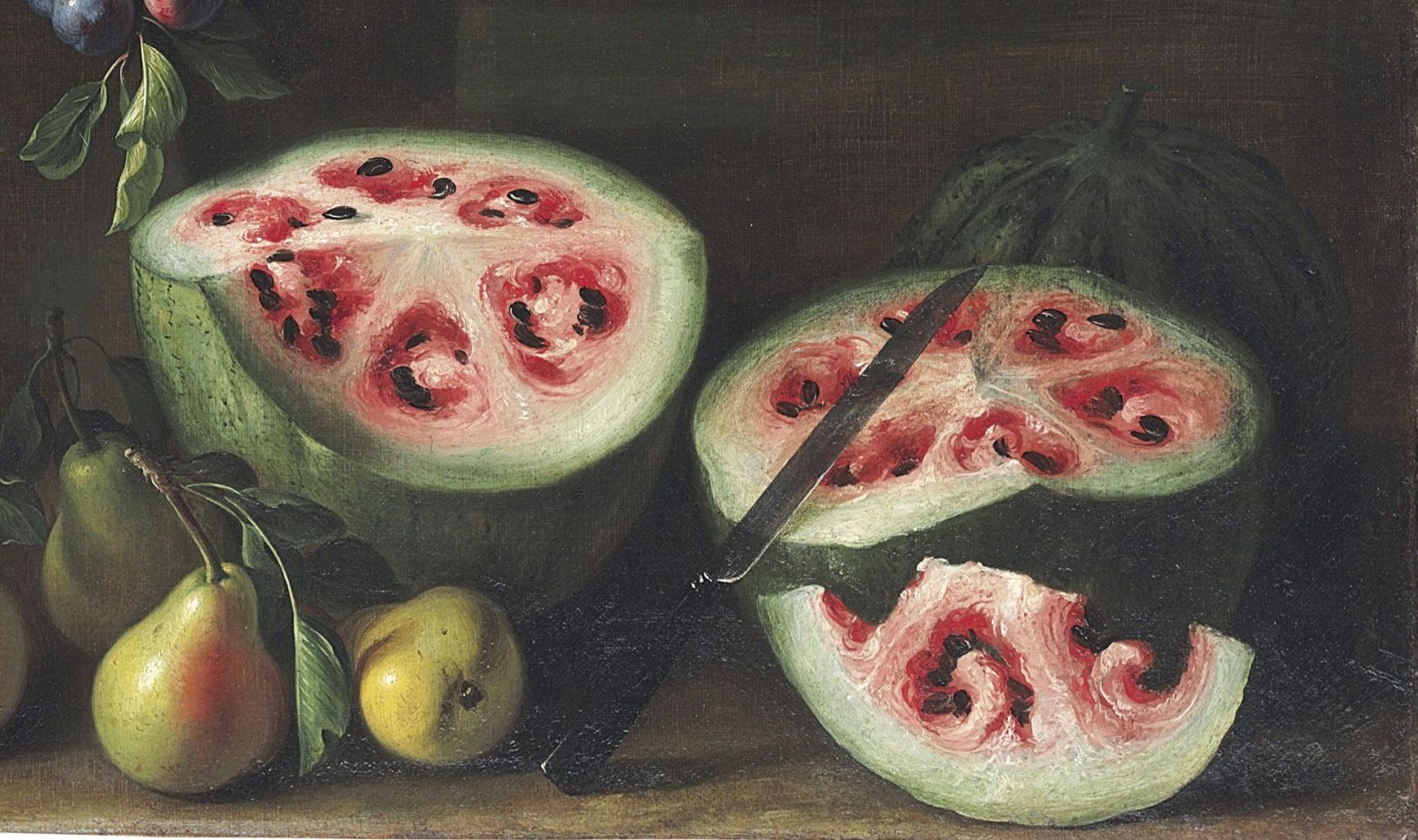
Do you seek out pre-domestication forms of fruits and vegetables, or do millennia of genetic engineering through selective breeding not count as "tinkering with it"?
A carefully carved out subset of an animal that lived on a carefully maintained agricultural plot, fed a precisely calibrated diet, and slaughtered at a precisely chosen time. An animal of a special humans have been breeding and molding for thousands of years.
> bag of salad leaves
Again, species we have been cultivating and changing for so long that we would no longer recognize its original wild form. Lettuce is related to daisies.
> It's just common sense advice that humans seldom make a food healthier by tinkering with it.
That common sense makes no sense, why would we spend effort making things worse for ourselves?
We tinker with things because it improves them. Sure, sometimes we don't discover the long term implications for a while (like with sugar), but in general, we cultivate and process because it makes things better.
Cassava that isn't processed is poisonous, as are many beans. Eating most fish that isn't deep frozen or thoroughly cooked is a good way to get worms. The same would be true for beef and pork too, except that we humans have so carefully managed (tinkered with?) our livestock that we've eliminated most of their parasites.
Given a choice between a package of heavily processed bacon from the grocery store, or a fresh chunk of wild boar meat that you hunted and killed yourself, which is better for you? Well, the latter is a hell of a lot more likely to give you trichinosis.
> As close to its natural form as possible is invariably best.
> I sure as heck am not going to buy a pre-battered pack of frozen 'fish fingers' given the choice!
That's not because the fish fingers are unnatural, it's because they're made of shitty, cheap ingredients.
Given the choice between, say, a nice cheese (a very heavily processed food involving a number of chemicals and months of human attention) versus finding a wild bee's nest and drinking all the honey, the former would be healthier for you, even assuming you don't get stung.
If you want to eat things that are good for you, "natural", "unprocessed" or "free from human tinkering" are simply not useful signals. They're not even that well-defined.
I'm of the exact same dietary philosophy as yourself. I derived it through reading and experimentation before paleo was even a thing, as it appears Jack Lalanne did as well. Most people who attack a simple sensible diet like this are really just exposing their own insecurities and desire to not give up the crap they injest themselves.
Lol, this isn't to do with insecurities - more to do with science.
I get that to many, science is a boogeyman - but come on, we're meant to be better than that on HN, since you know, so many of do actually have science backgrounds?
My parents owned a sheep property growing up, and I went to an agricultural school - the whole point of modern agriculture, and husbandy pratcises is that we do intentional thinks to manipulate animals/plants, to be safer for us.
Oh, and my wife is a veterinarian - and occasionally she gets crazies in, who think they can roadkill or dead wildlife - she's like, yeah, genius, great way to give yourself worms.
And preserved foods is...well, just that - to preserve food.
You know, like pasteurised milk?
Humans have been preserving food for millennia - it's just that our techniques have evolved a bit more than "add salt, let it dry in the sun".
I think many people might be equating junk food (i.e. sweets, chips etc.) with all modern foods - that's a logical fallacy. Food companies optimised for things consumers want - whether that's long shelf-life, for taste, for convenience etc.
We are so incredibly lucky these days - that we have massive range of foodstuff - just make sure you read the food labels, and pick the foods you want.
If convenience, or high-sweetness isn't what you want - then don't buy those products. Buy other products!
Ultimately, corporates aren't some evil faceless entity - nor do I believe there's some mysterious conspiracy going on.
They simply create what they think people will buy - and hence, make them money.
But I agree with parent - the whole "eat stuff that humans haven't touched" is a bit of a stupid argument - it's like romanticising pre-historic men.
In reality - they probably had hard, short lives, and were subject to parasites and infection constantly - a lot of it via the food they ate.
You are attacking an invisible bogeyman you concocted yourself. No one said anything about being anti-science. Your reactionary stance is anti-science. I'm not sure what your wife's profession or crazies she met or anything else you've said has to do with the topic at hand.
There are a thousand choices you can make when it comes to diet. It's not an all or nothing, democrat or republican, us vs them proposition. What the previous poster was getting at is that typically, for each choice you can make with your diet, a good rule of thumb is that the less processed a food is, the more likely it is to be better for you. That doesn't mean it's always true in every case, or that occasionally a bit of processed food will kill you, or whatever other straw man you are chasing after.
In any case, there IS plenty of science backing up the negative health effects of processed foods:
And the whole black-and-white "Don't eat processed foods" rule is exactly what I'm arguing against.
I don't think it's a good rule of thumb - you need to actually put some thought and consideration into what you're eating - e.g. read the food labels!
Everybody's personal stance is difference. For example, I eat heaps of "processed foods" - heck, I eat Soylent (https://www.soylent.com/) which is about as processed as you can possibly get.
Also, with regard to the articles that you spammed your post with (I assume you just keep a notepad with these around grins):
1. Article 1 (Too much added sugar is bad for you, and can lead to heart disease) - not to put a fine point on it, but no sit sherlock? Like, seriously? It doesn't matter whether it's processed or not (e.g. "natural" sugar, or say, honey), if you drizzle sugar all over your food, to the point of excess, yes, it's going to make you fat and at higher risk of heart disease.
2. Article 2 (Diet Quality) - There are two paragraphs (or clustered paragraphs) that reference "processed" in this article - the first refers to eating less red meat and less processed meat - so yes, I'm guessing that too much "natural" steak, or too much spam isn't great for you. I don't think anybody ever regarded spam as a health food (although I could be wrong, spam was before my time). There are ways to process meat and have it be healthy - the tradeoff, is I suppose you don't get the awesome taste of spam (lol), or the incredibly long shelf-life. The second point is that whole grains are better for you, as they are digested more slowly - you get the full grain, as opposed to just the tasty part.
3. Article 3 (Processed food can be addictive) - Reading the article, we learn that processed foods in this case is code for foods like "chocolate, French Fries, pizza, and ice cream" - umm, I think the point of those foods it that they taste good? As in, nobody ever said, gee, I feel like health food, let me get some of that pizza or ice cream. sigh*. The whole damn point of these foods is that they're engineered to taste food - they're not exactly marketed as "health foods", so it's not exactly like pizza or ice cream companies are misleading you. Also, chocolate is interesting, in that it can be very "natural" - but still very addictive.
I'm not going to go through and decipher/debunk every single one of your articles.
But my point is simple - there's very little in the way of a blanket "don't eat processed foods" in the links you posted.
For some people, they might think it a useful guideline - but I suspect in this case, they're throwing out the baby with the bathwater.
For myself - I just read the food label, and exercise some common-sense. If it's confectionery, or it's a "treat" food (whether processed or natural - although to be honest, it's more a spectrum of how processed, since nearly any food you can legally buy is processed to some degree), I exercise moderation.
With 5 minutes of Googling, I can find similar analogues to argue that so-called "organic" or natural food is bad or even toxic for you:
In general - I think modern agriculture and food techniques have been a boon for humanity - they've given us safe, large-scale food production to feed the masses. We've eradicated pests/diseases from our crops, and also engineered our crops to be more pest/disease resistant, have higher-yields and taste better. So we've been "processing" food for a long time. And we've moved from salting/drying things, to more modern preservation techniques, that preserve the nutritional content and taste of our food as well, and prolong shelf-life and packability of foodstuffs.
But of course, then we have modern inventions like the Twinkie, or the <insert junk food of choice>. I honestly hope people aren't arguing these are health foods. But if you argue that "processed" foods are bad, because they also gave us the Twinkie - well, you're basically throwing out all the added benefits (convenience, low-cost, shelf-life) of modern foods.
Even the fresh fruits/vegetables we buy are quite "processed" - I actually prefer this to so-called organic food-stuffs, because I know the food safety regulations around your supermarket fruit/vegetables are so much stricter than for organic farms. And I'm also fine with buying a pre-packaged salad in a sealed plastic bag, even though it's processed, because I know it was probably washed by machine, and they have health and safety checks in the processing pipeline, to ensure pathogens are at acceptable levels. (although I do confess to occasionally rinsing them again, for possibly irrational reasons).
it's really hard maintaining this discussion, as your responses keep dragging in things that have nothing to do with what I said. I have nothing against science, modern agriculture, selective breeding, basic packing and cleaning techniques, etc.
And calling "rule of thumb" black and white indicates that you aren't familiar with the typical usage of the term, which is the opposite of "black and white".
If you can't conceive of the concept of processing as being a spectrum of more or less transformation of the initial food item, then there isn't any reason to further this discussion. If you think that cleaning lettuce is the same as using a bioreactor to change the chemical structure of a food, you are just plain wrong.
> I'm of the exact same dietary philosophy as yourself. I derived it through reading and experimentation before paleo was even a thing, as it appears Jack Lalanne did as well. Most people who attack a simple sensible diet like this are really just exposing their own insecurities and desire to not give up the crap they injest themselves.
> a good rule of thumb is that the less processed a food is, the more likely it is to be better for you".
The things you have just named are processing - so it may make more sense if you actual clarify what exactly it is you are against?
What does it mean for a food to be "less" processed, then?


Whilst Jack Lalanne's quote 'if man made it don't eat it' is simplistic it's basically saying go for the steak or the bag of salad leaves rather than the corn dog and powdered mash potato.
This isn't about 'weird' foods like raw milk, or taking things to the nth-degree. It's just common sense advice that humans seldom make a food healthier by tinkering with it. As close to its natural form as possible is invariably best.
Does that mean I'm not gonna pepper my cod fillet, of course not. But I sure as heck am not going to buy a pre-battered pack of frozen 'fish fingers' given the choice!